A Complete Guide to the Fundraising Process: Key Steps You Must Know!
Introduction: The Fundraising Strategy Every Startup Should Know
For many startups and entrepreneurs, having a world-changing idea is only the first step. The real challenge lies in securing enough capital to execute that idea and scale operations. Fundraising is not just about getting money; it is a process of validating your business model in the market and finding strategic partners. However, many founders hit roadblocks because they are unfamiliar with how fundraising works. This article comprehensively explains the key steps in the fundraising process to help you move forward steadily on your entrepreneurial journey.
5 Key Steps in the Fundraising Process
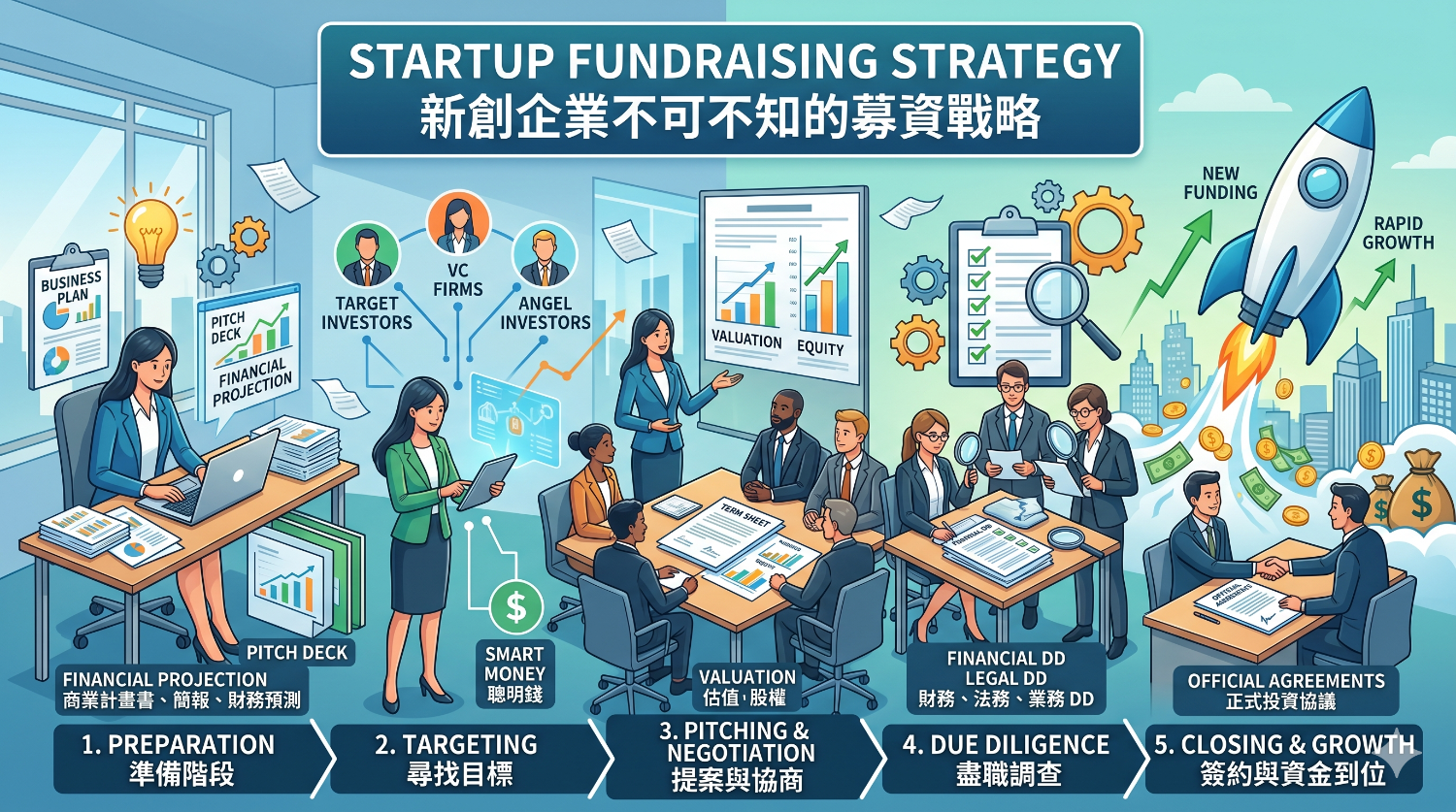
1. Preparation: Writing a Business Plan and Financial Projections
Before approaching any investors, you must concretize your company's current status, future vision, and profit model. An excellent business plan and Pitch Deck are your foot in the door. The content should include:
- Pain Points and Solutions: What market problem does your product solve?
- Market Size and Competitive Analysis: How big is your target market? What is your competitive advantage?
- Business Model: How does the company make money?
- Financial Projections: Revenue and expense forecasts for the next 3 to 5 years, and how the funds will be used.
2. Finding Targets: Approaching the Right Investors
Not everyone with money is a suitable investor. You should look for Venture Capitalists (VCs) or Angel Investors that match your company's current stage (e.g., Seed, Angel, Series A). Additionally, understanding the investor's past portfolio and resources will help you find "Smart Money"—investors who provide not just capital, but also connections and industry experience.
3. Pitching and Negotiation: Signing the Term Sheet
When investors show interest in your project, both parties will enter a stage of in-depth interviews and negotiations. Discussions will revolve around the company's "Valuation," investment amount, equity percentage, and board seats. If a preliminary consensus is reached, the investor will issue a "Term Sheet." This is a letter of intent; although most clauses are not legally binding, it lays the foundation for the formal contract.
4. Due Diligence (DD)
After signing the Term Sheet, the investor initiates due diligence. This is a comprehensive review of the company's true condition, usually involving teams of accountants and lawyers. It is divided into:
- Financial DD: Verifying past financial statements and tax status.
- Legal DD: Checking incorporation documents, IP patents, and employee contracts for potential disputes.
- Business DD: Validating customer contracts, technical feasibility, and market data.
Founders must fully cooperate during this stage to demonstrate the company's integrity and transparency.
5. Signing and Closing
If due diligence goes smoothly, the lawyers of both parties will draft formal investment agreements (such as the Shareholder Agreement and Stock Purchase Agreement) based on the Term Sheet. Once all documents are confirmed and signed, the investor will transfer the funds into the company's account. At this point, the fundraising process is successfully concluded, and the company enters its next phase of rapid growth.
Conclusion: Fundraising is a Marathon
A complete fundraising process often takes 3 to 6 months, or even longer. Founders should initiate their fundraising plans at least six months before the company's runway runs out. Stay patient, adjust your strategy based on investor feedback, and you will stand out in a fiercely competitive market.
References:
- National Development Council Taiwan Startup Hub - Fundraising Preparation and Practical Process (https://sme.moeasmea.gov.tw/startup/)
- Taiwan Venture Capital Association - Startup Fundraising Playbook (https://www.tvca.org.tw/)
Frequently Asked Questions
- How long does the fundraising process usually take?
- Generally, a complete fundraising process takes about 3 to 6 months. This depends on market conditions, company readiness, and the investor's decision-making speed. It is highly recommended that founders begin fundraising at least six months before their cash runway runs out to avoid accepting unfavorable terms due to time pressure.
- What is a Term Sheet? Is it legally binding?
- A Term Sheet is a preliminary letter of intent outlining the terms and conditions of an investment, used to confirm mutual understanding on investment amount, valuation, and equity. Except for clauses like "Confidentiality" and "Exclusivity" (no-shop clauses), most of the document is usually not legally binding.